Two ways to settle a chimney finding
The Level 2 report is back. It lists a rusted cap, a cracked crown and a dry water mark on the attic framing beside the chimney. Now the agents have to agree on one of two paths: the seller has the work done before close, or the seller gives a credit and the buyer handles it afterwards. Both are ordinary. This post compares them for a chimney, item by item.
We do not tell anyone which to choose. That is a negotiation between the parties and their agents. Our part is making sure each side holds a written number to negotiate with.
Start with each finding and its price
Every finding in our report either carries a published price or gets a written quote.
| Finding in the report | What it usually leads to | Price |
|---|---|---|
| Water mark at the chimney in the attic or on a ceiling | Leak traced and repaired | $570 to $3,400 |
| Water held behind a wide stack | Cricket built on the uphill side | $455 to $1,025 |
| Tired flashing and no cricket | Cricket plus flashing renewed all round | $680 to $1,700 |
| Heavy creosote in the flue | Sweep | from $425 |
| Cracked or crumbling crown | Crown patched or recast | Written quote after the inspection |
| Cracked or missing flue tiles | Liner | Written quote after the inspection |
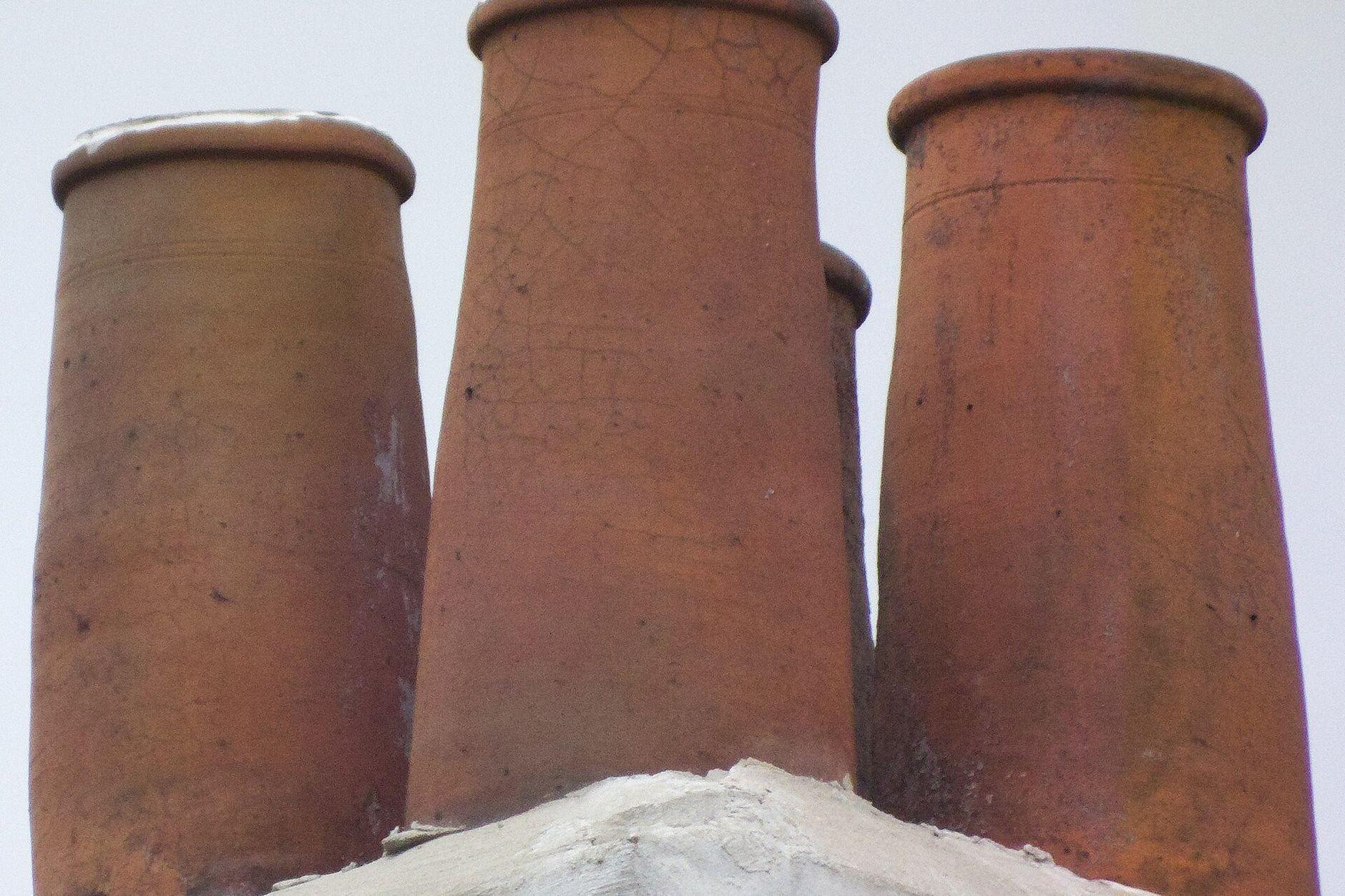
| Cap missing, rusted through or loose | A new cap fitted | quoted after we measure |
| Damper stuck or not sealing | Damper repaired or replaced | Written quote after the inspection |
When fixing before close tends to work
- The item is marked safety. A lender or insurer may want it done, and a seller who fixes it takes the question off the table.
- The repair is small. A cap, quoted on site, is an easy item to finish and document.
- The seller wants nothing left open for the buyer to reopen later.
The seller hires the work, and we send the papers the buyer will want: the invoice, a note of which finding each repair answers, and photos of the finished part. If the buyer wants proof it was done, a Level 1 at $55 confirms the repaired part in writing.
When a credit tends to work
- The repair needs a written quote and the figure is large, such as a recast crown or a full liner.
- The buyer wants to pick the contractor and the timing.
- The right repair depends on the buyer's plans. A buyer who will switch to gas may not want a liner sized for wood. Fitting a gas insert into the firebox the house already has runs $2,850 to $5,700 with us, and that changes what the old flue needs.
A credit is only as solid as the number behind it. That is why we write each quote against a named finding, with the part, the work and the figure, on the same address as the report. The agents can attach it to the request as it stands.
What decides it, and the next step
Three facts usually decide the path: the price, whether the item is a safety finding, and who wants control of the work. Once every finding has a figure beside it, the conversation between the agents gets much shorter. Ask for a written quote on each finding and include the report date, the address, and which findings you want priced. If there is no inspection yet, ask for the Level 2 and the quotes together.
The papers for each path
If the seller repairs:
- An invoice with the address and the finding it answers.
- Photos of the finished work.
- A short note, sent to the same copy list as the report, that the item was dealt with.
If the buyer takes a credit:
- The written quote, addressed to the property.
- The report finding it refers to, named.
- A scope clear enough for a second contractor to price the same job.
A worked example
Picture a three bedroom house in Covina with gas logs in a masonry fireplace and its original cap. The Level 2 finds the cap rusted through, a hairline crack running across the crown, and an old water mark on the attic rafters beside the chase that is dry on the day.
The report sorts them. The cap is a repair item, quoted on site. The crown is a repair item with a written quote. The water mark is a note, with a recommendation to trace it if it is ever damp. The agents now have three lines: two with numbers and one with a reason. A seller could replace the cap before close and credit the crown, or credit both. Either way, nobody is arguing over a guess.
Mistakes that slow a sale
- Asking for a credit without a written figure. The other side cannot agree to an amount nobody has priced.
- Treating a note as a repair. Notes are context, not a demand.
- Letting a handyman patch a crown before close without a scope. The buyer's agent will ask what was done, and nobody can say.
- Forgetting the copy list. A repair invoice that only the seller holds does not help the buyer's file.
Next
The home sale page shows how findings turn into requests, and the up to code repairs page lists the usual fixes with their prices. For a liner finding in particular, read Liner Quotes After a Failed Report. Report dates and the findings you want priced go through the contact page.
Chimney on the Escrow Checklist?
Voss films each flue, checks the attic and roof, and sends findings and priced repair lines to every party you name. We book out of Covina and cover West Covina, Glendora, Arcadia and the valley cities around them.